DAB+: it matters more than ever
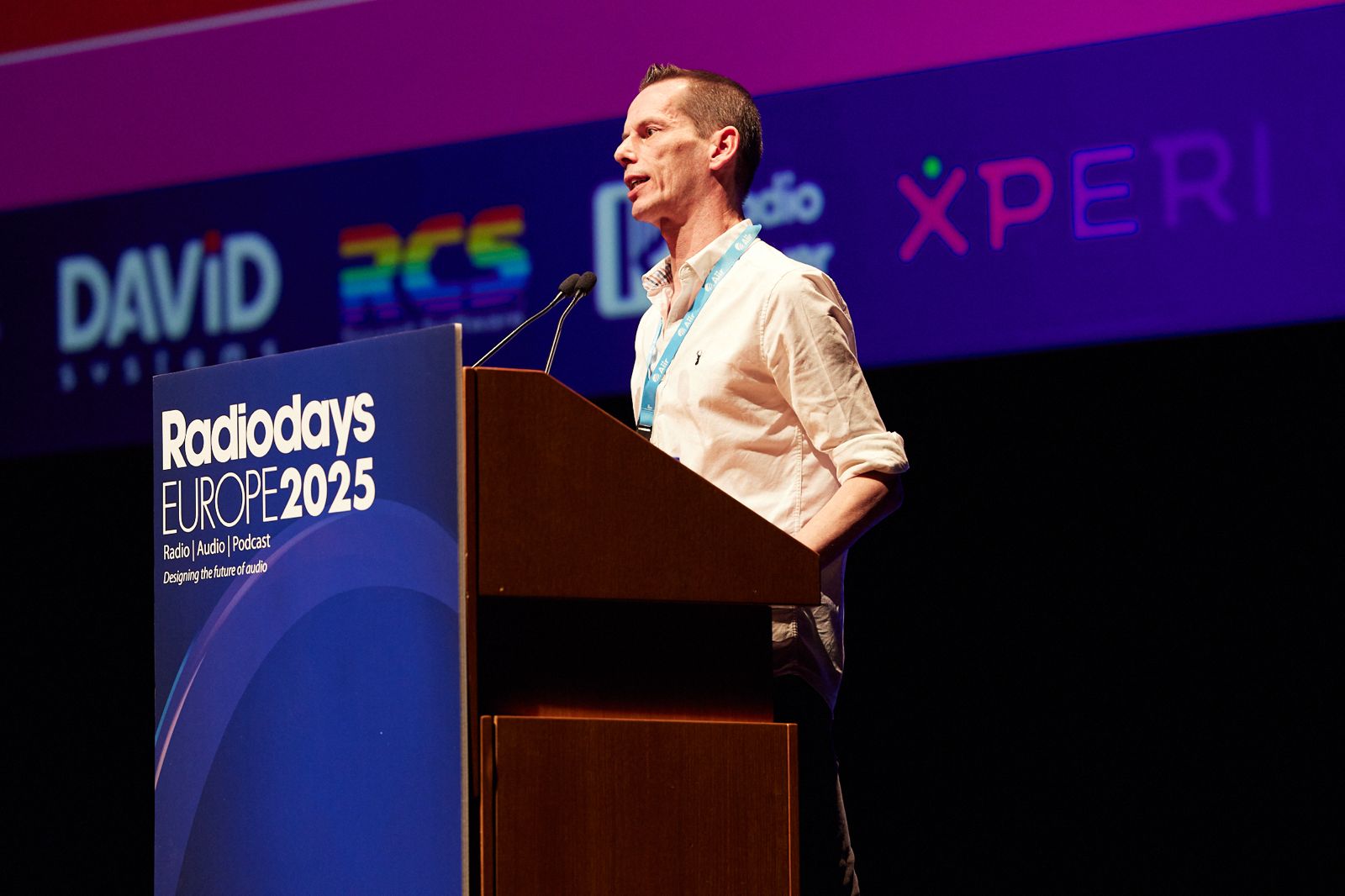
Bernie O’Neill, Project Office Director of WorldDAB introduced the session by saying we are at an unusual point in time with different countries in different places in the digital transformation as well as telecoms regulations changing around the world which means it is a critical moment for the future of audio and radio. Jaqueline Bierhorst, President of WorldDAB then gave an overview of the progress that has been made with DAB+ in Europe over the past year.
Jaqueline began by saying that radio faces challenges and gave a few examples: FM is full and there is no space to innovate; it costs about 80% less to broadcast on DAB than on FM and consumes less energy than FM; online is less robust than DAB+ in times of crisis; there is no cohesive global measurement; a healthy audio ecosystem requires digital broadcast and internet streaming to encourage innovation and financial security. Advancing adoption of DAB+ needs the support of smart regulation and can often be a catalyst for strengthening the audio ecosystem. As DAB+ supports national, regional and local broadcast then large audiences can be reached at a low cost, which is more efficient than FM, is free to air with no gatekeepers. A map was displayed which showed almost total, or interest in adoption of DAB+ across Europe as well as adding that DAB+ is being adopted in much of Asia and Africa as well as already being adopted in Australia and there are on average five times as many services on DAB+ as analogue and France will hit a ilstone next month with the launch of 2 national DAB+ multiplexes.
Absolute Radio UK brand extensions was given as one example of how DAB+ can be used effectively – there are now 10 stations in their portfolio, have shut down AM, moved from FM and have tripled their audiences with their extension brands. Additionally The SQUAWK was launched on DAB+ as a pop up station, this was a commercial partnership with Global in the UK and Netflix to promote the launch of Stranger Things Season 5. Jaqueline added that implementing DAB+ is not just about listener growth, it also drives revenue, which has risen 39% in the last 10 years, even though there is now competition with internet advertising.
Driving growth in DAB+ requires
Coverage – particularly all major cities and roads,
Content – needs to be more compelling than FM,
Consumer – devices need to be available
Cars – EECC and legistration from Europe means in-car penetration is growing steadily
Communication – a sustained promotion of DAB is essential.
PLUS industry collaboration, policy and regulation.
Priit Vare, Head of Radio for Duo Media Networks in Estonia talked about how they have been using DAB to drive their listening and revnue through brand extensions. He said there were no more frequencies available in Estonia and there are no smart speakers because of the language. Streaming has increased by approximately 200% since 2020 and DAB+ can help to combat this. By the end of this year, coverage in Estonia will be at 85% and DAB currently accounts for 2.5% of weekly reach.
Sara Jacobi, Marketing Manager, Digitale Radio Vlaanderen said that they have invested heavily in coverage, content and communications and this has paid off because paid off as last year for first time more than 50% of listenership was exclusively on digital radio. Challenges were that both younger and older audiences were difficult to engage, for different reasons, but collaboration with the government and broadcasters, and even across the borders with other countries has had a positive effect. A strategic framework in communications and technical was implemented as well as the tagline DIGITAL RADIO HAS IT ALL has been effective. Additionally, once a year they work together with important retail partners for digital radio week to help convince people to buy a DAB+ device, which has been successful in the older demographics.
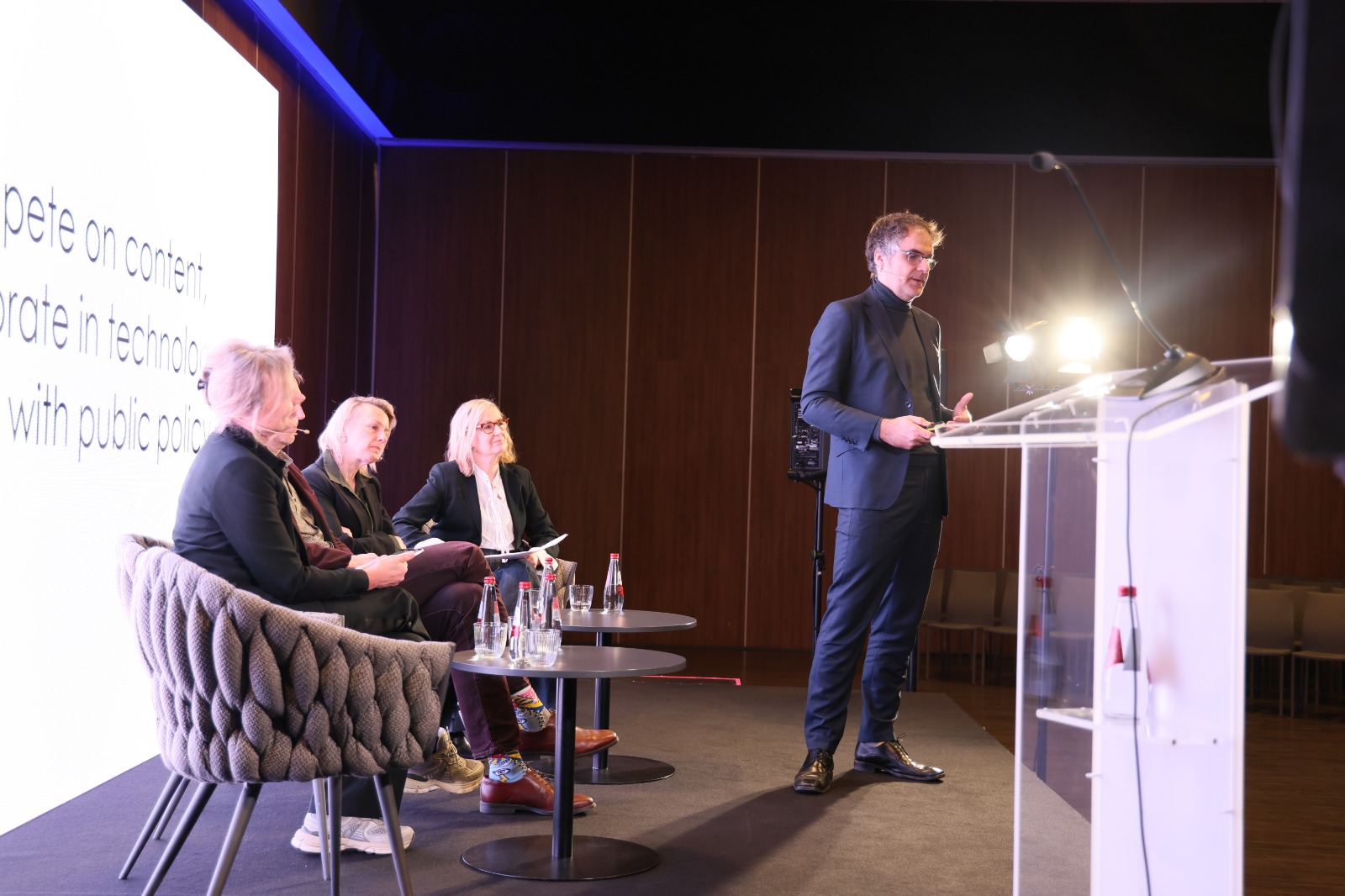
David Fernandez Quijada presented the reasons behind a well thought out regulatory and licencing plan being a key driver for radio in the future. He said that ups and downs are expected with new technology launches which are often more complicated than expected. He added that even though broadcasters compete on content, they should collaborate with technology and work to a framework with good and clear public policy.
He said that public policy allows for the alignment of all the different stakeholders, especially broadcasters who could be hesitant and also help boost adoption among listeners, it can also unlock investment opportunities and with warning systems, increase protection in cases of emergencies. But he said there is now need to reinvent the wheel, other countries have already been through this process and so WORLDDAB have brought together the different policies and experiences and the result is the DAB+ Public Policy doc which will be released in a few months covering strategy, licensing, transmission and reception and can be used as a toolbox to help stakeholders on the pathway to digital radio to reduce uncertainty and help them to have amore effective transition.
Bernie O’Neill added the DAB+ Public Policy toolbox will be launched in May and once launched will support people working on policy and regulation as countries go through the process, she then ask Jaqueline why should countries invest in DAB+ and Jaqueline replied that it ‘Gives radio reach, resilience and control, supports safely, protects language and keeps distribution in our own hands – in times of war and threat you need a broadcast resilient platform.’
David said that although there are costs associated with implementation it is a long term investment, the DAB+ Public Policy toolbox is a way to make it easier and smoother for stakeholders who can look at measures that have been used in other countries to support the implementation such as extending licences, direct subsidies, support in different ways that can help with costs as well as a section in the report that gives the benefits for each stakeholder. He added the key to success is collaboration and the outcome for all the stakeholders should be a ‘win win situation for everyone.’
There was a question from the audience: What are the conclusions from the Switzerland case where the public broadcaster had moved off FM but is now returning, having lost 50% of coverage. Jaqueline replied that this case was very specific and that FM switch off should only be considered if it works for the individual country and it is not necessarily the goal for every country. She added this should not be an attack on DAB+ as there have been many FM transmitters switched off across Europe with a positive effect.