Conflict journalism: How podcasts can break through the noise
In an age of constant crisis – wars in Ukraine and the Middle East, rising global tensions, and an overwhelming поток of information – audiences are not just struggling to keep up. They are switching off.
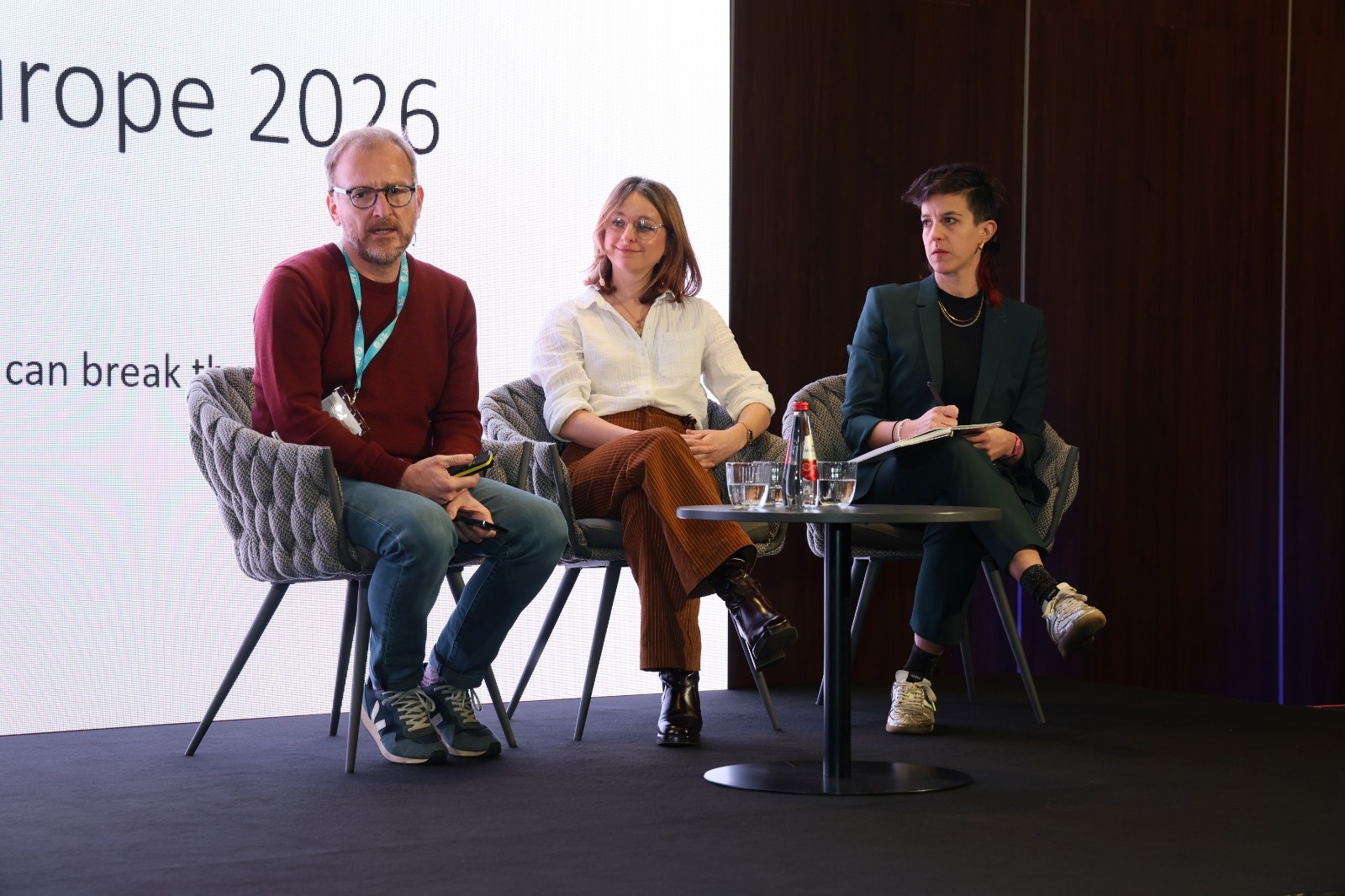
At Radiodays Europe, Adélie Pojzman-Pontay – Co-host and producer of Ukraine: The Latest in 2024 –, Guilhem Delteil – senior reporter at Radio France International – and Sarah Toporoff – Head of Growth Europe, Disco by Headliner – explored how podcasting can cut through that fatigue – not by simplifying the news, but by reshaping how it is told.
For Delteil, whose work focuses on Palestinian lives, the challenge is not only reporting facts, but restoring complexity. His podcast moves away from timelines and headlines, instead telling stories through geography, identity, and lived experience. In doing so, it reframes places like Gaza – not as abstract conflict zones, but as real, historical, and human spaces that existed long before war defined them.
This shift matters. As Delteil suggested, understanding conflict requires stepping outside binary narratives. Listening to people “fully” and not as one side of a mirrored opposition, but as individuals with their own histories, hopes, and contradictions becomes essential to making sense of where we are today.
A similar approach underpins Ukraine: The Latest, a daily podcast from The Telegraph co-hosted by Pojzman-Pontay. Since the first day of the Russian invasion, the show has combined fast-paced military and political updates with deeper narrative reporting from the ground. Its format moves fluidly between granular analysis and intimate storytelling – from battlefield developments to the quiet, devastating reality of a journalist’s funeral in Kyiv.
That contrast is intentional. The podcast’s strength lies in its ability to hold both scale and intimacy at once – something traditional formats often struggle to do. Over time, this has built not just an audience, but a relationship: millions of listeners who return daily, not only for information, but for understanding.
Crucially, speakers emphasized that podcasting allows for a degree of subjectivity rarely seen in traditional news. The journalist is no longer invisible. Their perspective, presence, and even vulnerability become part of the story – bridging the distance between audience and event.
In a media landscape dominated by speed and noise, this shift is significant.
Because people are not disengaging from the news due to a lack of interest.
They are disengaging from a lack of connection.
And sometimes, the most powerful way to understand a conflict is not to hear more about it – but to hear it, up close, through someone else’s life.