Fighting for Trust: Defending Public Media in a Fractured World
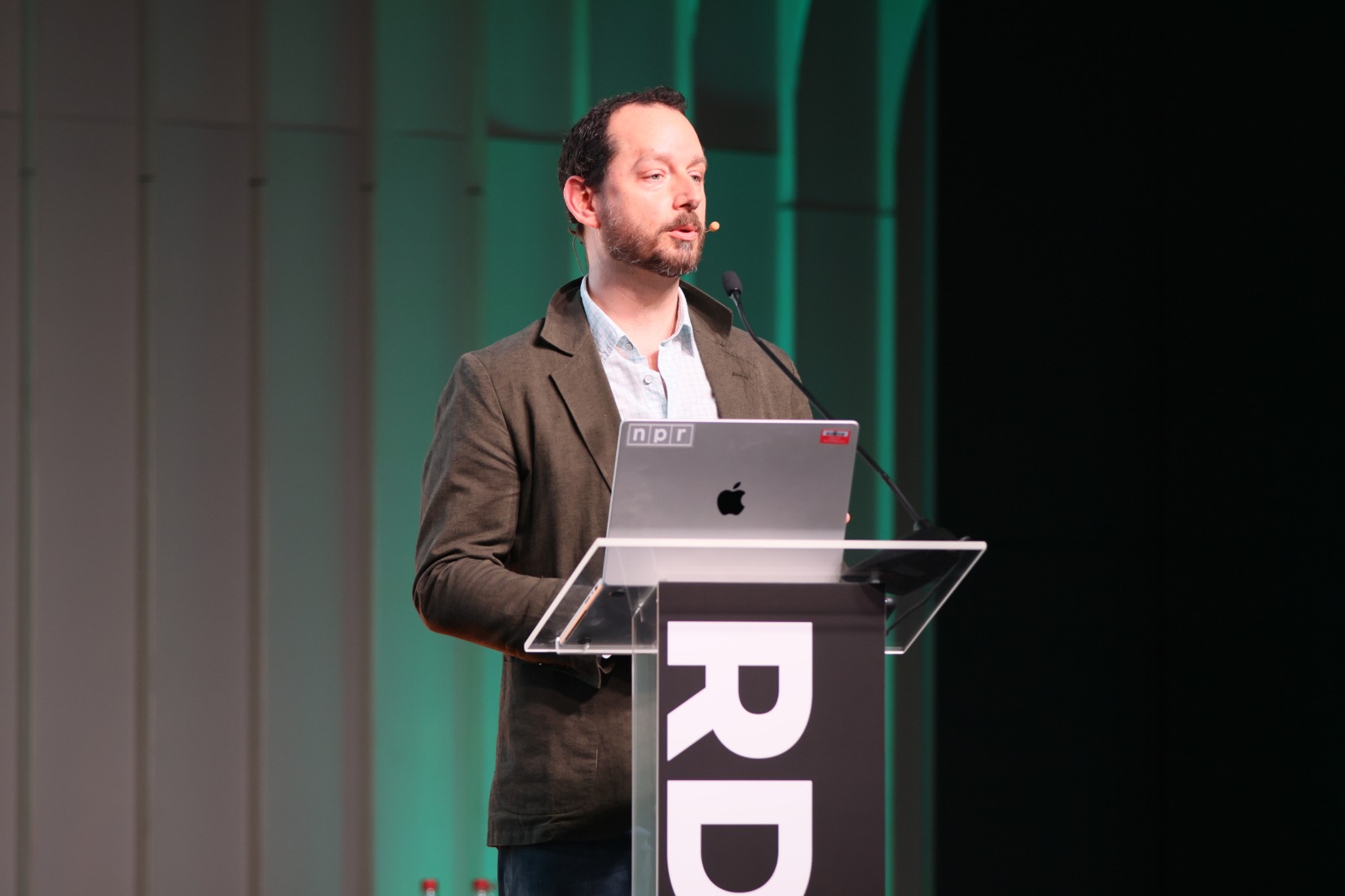
As the afternoon sessions began, Ryan Merkley – Chief Operating Officer, NPR – and Kristian Porter – CEO, Public Media Alliance – led a sobering yet ultimately hopeful conversation about what it means to defend public media in a time of political pressure, declining trust, and a collapsing commercial news landscape.
Merkley described the current state of public media in one word: disrupted. But his message was not about decline, it was about transformation. NPR is not trying to preserve an outdated model of radio; it is actively building a future-proof version of public service media – one that is independent, collaborative, and deeply rooted in the communities it serves.
That mission has never been more urgent. In a media environment increasingly shaped by outrage, algorithms, and the disappearance of local journalism, Merkley positioned public media as something fundamentally different: calm, contextual, human. Not just reporting events, but helping people understand them.
At the same time, the stakes are tangible. Merkley spoke openly about political pressure in the United States, including attempts to eliminate federal funding for NPR and PBS. While public support remained strong, the impact of these cuts has been uneven – particularly devastating for smaller, rural stations where such funding can represent a critical share of total budgets. In this sense, the issue extends far beyond one organisation; it is about the survival of local civic infrastructure.
Porter placed this within a broader global pattern. Across countries, public media is facing similar pressures – not always identical in form, but consistent in intent: weaken independent journalism, erode trust, and limit its ability to hold power accountable.
Yet the conversation was not defined by pessimism. Merkley emphasized that public support remains powerful and that this moment presents an opportunity. NPR is doubling down on collaboration, digital distribution, and direct relationships with audiences. The goal is not simply to survive, but to evolve.
What becomes clear is this: public media is not a legacy institution to be protected out of nostalgia. It is an essential part of democratic infrastructure.
And if it is not actively defended and reimagined, no one else will do it for us.