
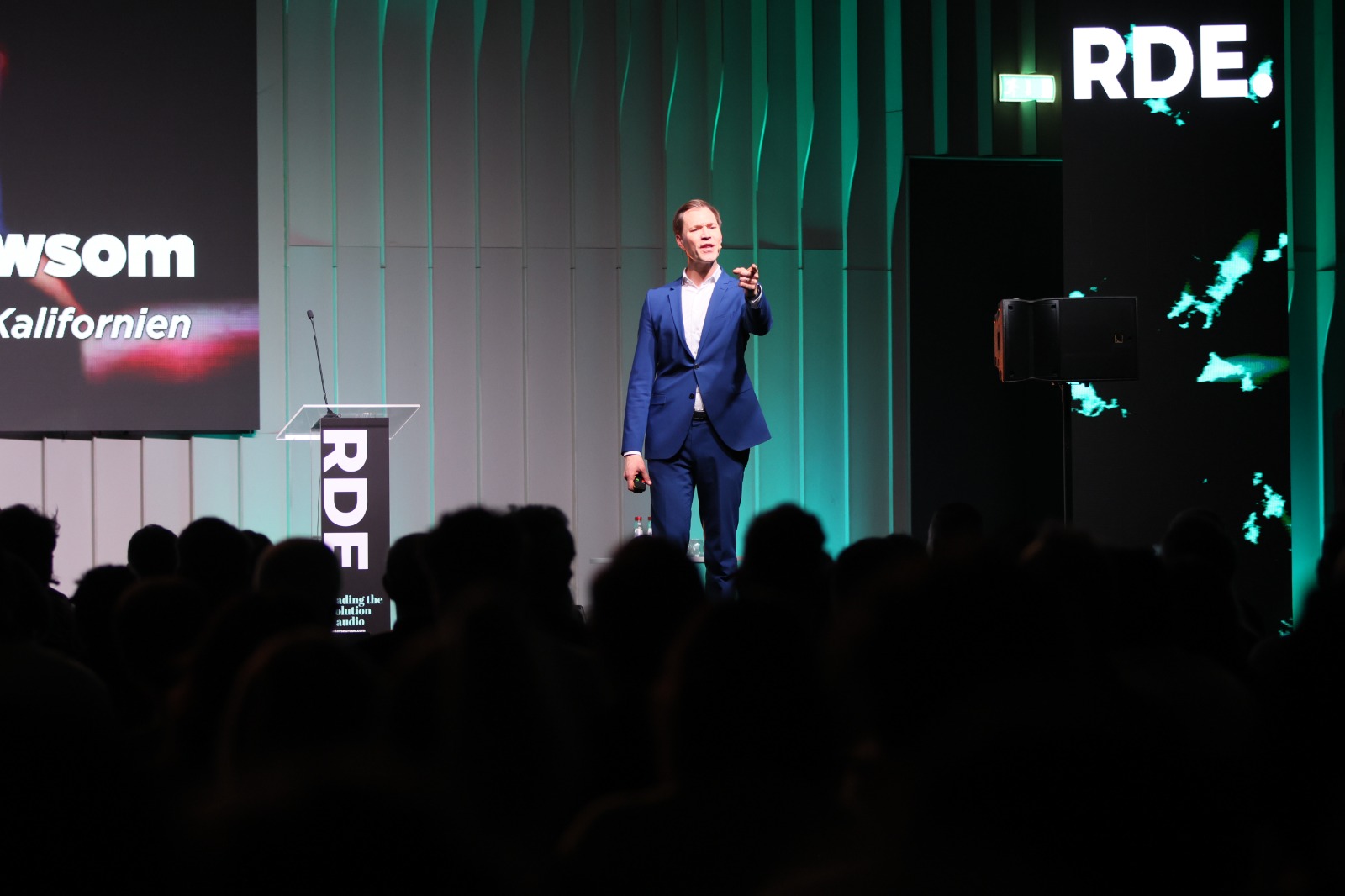
The New Rules of Campaigning: Lessons from Trump for Radio
Modern political communication is no longer just about policies, facts, or rational arguments. As highlighted by Julius van de Laar, Chief Strategist at Van de Laar Campaigning, together with Martin Liss, audio entrepreneur and management consultant from Berlin, it has become an emotion-driven game, where attention, identity, and entertainment play a central role. This shift, strongly associated with Donald Trump, offers important lessons not only for politics but also for the radio industry.
Van de Laar, who previously worked on Barack Obama’s campaign, emphasized how dramatically campaigning has changed. While Obama’s strategy relied on structured messaging and data, Trump’s approach is built on emotion, simplicity, and strong positioning. His communication style creates a powerful connection with audiences — to the point where supporters elevate him beyond a typical political leader. As noted during the talk, being perceived almost “like a god” is, from a communication standpoint, a remarkable achievement.
A key element of modern campaigning is the use of audio and cultural symbols. For example, Trump’s association with the song YMCA creates energy and emotional familiarity, while Kamala Harris’ use of Freedom reinforces political values and identity. These choices are not accidental — they act as emotional shortcuts that instantly communicate what a campaign represents.
One of the most striking insights from the session was that “America has figured out how to turn politics into entertainment.” In contrast, European political communication is often perceived as more reserved and less engaging. In the U.S., politics increasingly overlaps with entertainment formats such as podcasts, memes, and viral social media content. Politicians are no longer just decision-makers — they are also media personalities.
Podcasts, in particular, play a growing role in shaping political narratives. Many politicians now use them to bypass traditional media and speak directly to audiences. This reflects a broader shift: trust in mainstream media is declining, while niche platforms and personal channels are gaining influence. As a result, communication has moved from mass media to more targeted, community-based engagement.
Another defining feature of modern campaigning is the importance of conflict and contrast. As discussed in the talk, “the easiest way to get views is to get enemies.” Trump’s strategy often relies on clear opposition, strong statements, and constant confrontation. This approach aligns with the idea that “strong and wrong beats weak and right” — meaning that confidence and clarity can be more effective than accuracy in capturing attention.
Closely connected to this is what can be described as a “media presidency.” Trump’s communication strategy involves continuously shifting narratives, repeating key messages, and overwhelming audiences with information. While this may create confusion, it ensures one thing: he remains the center of attention.
Interestingly, even political opponents are adopting similar tactics. Figures like Zohran Mamdani and Gavin Newsom are using clear messaging, social media engagement, and even meme culture to connect with audiences. This demonstrates that entertainment and emotional appeal are no longer optional — they are becoming standard tools in political communication.
However, this evolution raises an important question: do communicators now have to become entertainers to stay relevant? This tension between credibility and entertainment is especially relevant for radio. While audiences expect engaging content, there is still a need to maintain trust and authenticity.
Despite all the changes, one fundamental principle remains clear: strong positioning is essential. Trump’s messaging is simple, consistent, and emotionally charged, making it easy for audiences to understand and remember. This clarity is one of the key reasons behind his continued influence.
For the radio industry, the lessons are clear. To remain relevant, radio must go beyond simply delivering information. It needs to create emotional connections, embrace engaging formats, and interact more actively with its audience. At the same time, it must balance entertainment with credibility — a challenge that will define the future of communication.
In conclusion, whether one agrees with Trump’s style or not, his approach highlights a crucial reality: people today do not just want to be informed — they want to feel something. And for both politics and radio, that may be the most important lesson of all.